At Latitude 0° in Kampala, a hotel built on the principles of sustainability and local craft offers art, peace, and a place to feel genuinely present in the city.
The cat arrived before the coffee did.
I was seated on the terrace of Zero restaurant at Latitude 0°, Uganda’s most quietly remarkable hotel. It was half past six and the air was still cool. Then, without ceremony or invitation, a small tabby cat climbed into the lap of the man at the next table, settled in, and stared into the middle distance with the composure of someone who had nowhere better to be.
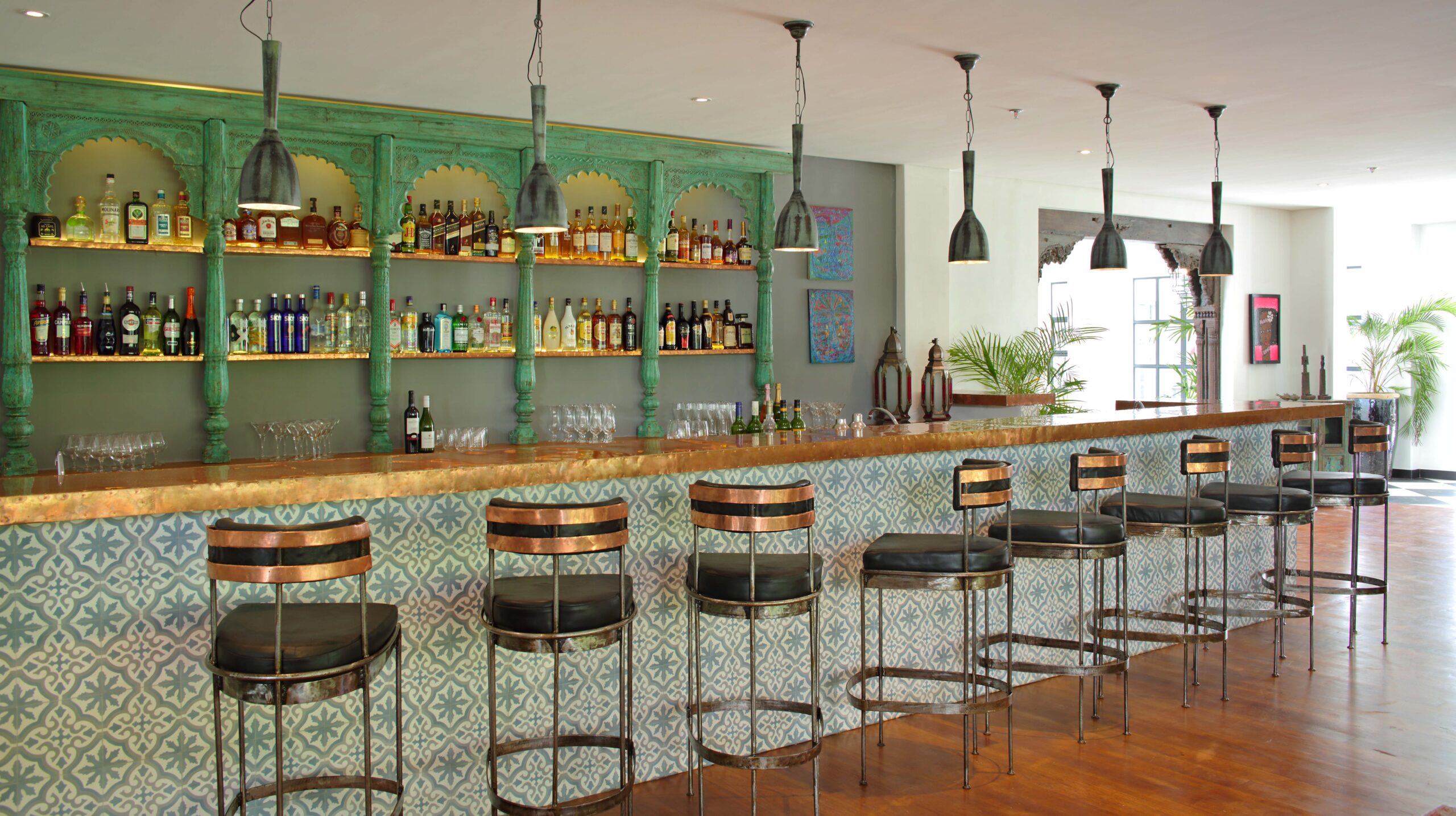
The man, a guest in a blue polo shirt, did not look up from his breakfast. He rested one hand on the cat’s back and picked up his spoon with the other. In front of him sat a glass mug of pale ginger tea, still steaming.
This, I came to understand, is how things work at Latitude 0°.
The hotel sits on Makindye Hill, high above Kampala. I was there for work, and a Ugandan friend had been the one to suggest it. I am glad I listened. I left each morning before seven to beat the traffic, my driver navigating the city’s chaos with cheerful ease, and came back each evening around five or six, tired in the way that all-day meetings make you tired. Each time I came back up the hill and felt my shoulders drop.
Latitude 0° was conceived as what its founders describe as “an oasis.” But not one that shuts the city out. Kampala is present throughout: in the food, in the people, in the art that covers nearly every surface.
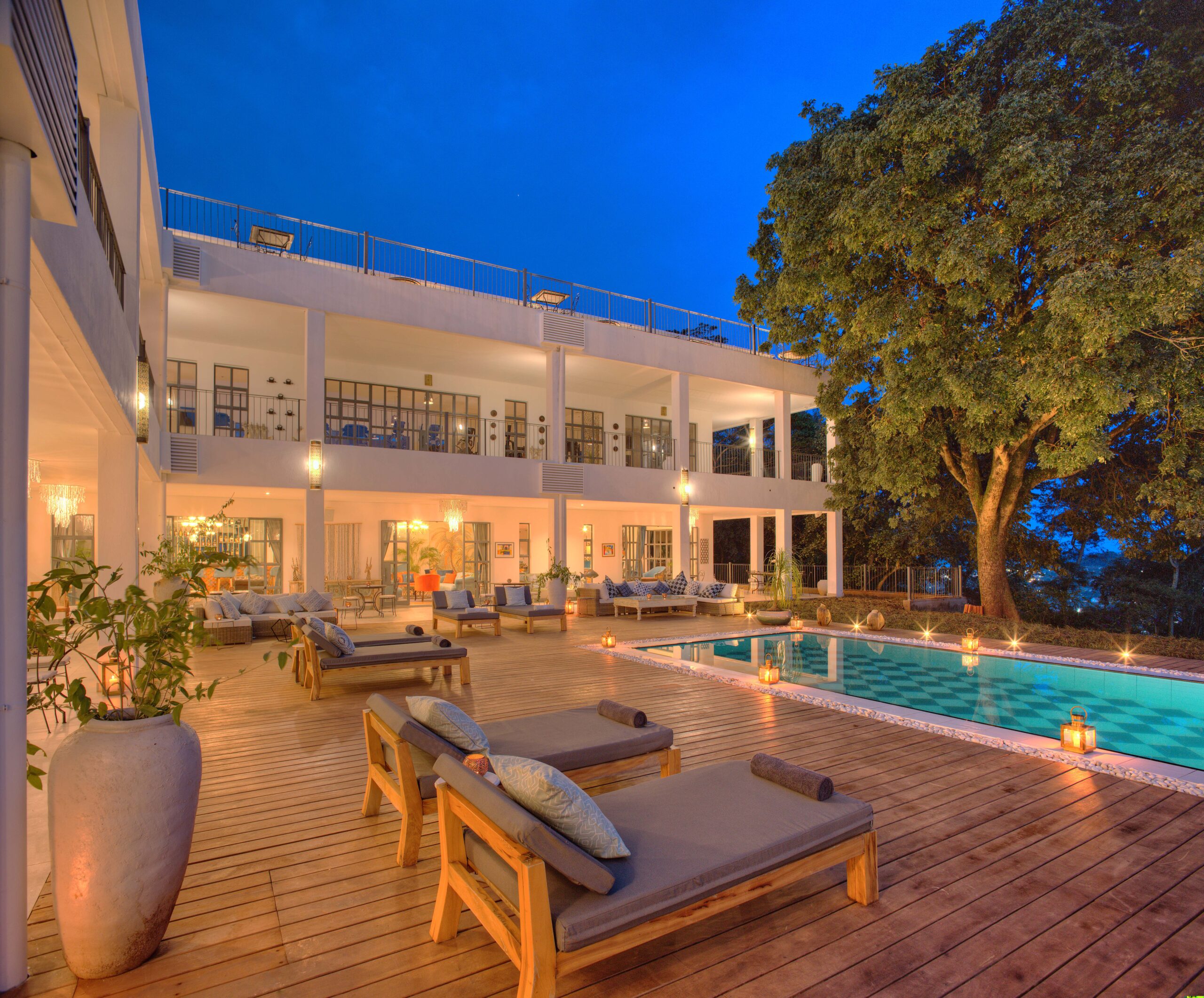
A bold black-and-white checkerboard floor runs the length of the entrance. Two orange velvet club chairs face each other over a glass-and-brass coffee table. Two chandeliers of hammered copper discs catch the light from the high clerestory windows. A large monochrome landscape photograph commands one wall. Before you have checked in, you have already understood that this is a hotel that takes art seriously.
It does. The corridors leading to the rooms are lined with monumental black-and-white portrait photographs: large, raw images of East African figures printed on canvas and framed in unfinished wood. Each face watches you pass. In one of the common areas, mounted on a whitewashed brick wall, hangs a map of the African continent assembled entirely from salvaged gears, cogs, and ball bearings. Every piece is reclaimed industrial metal. It stopped me every time I passed it.
The rooms are each different. Mine was a junior suite, generous and calm, anchored by a king bed with an elaborately carved lattice headboard in silver-grey. The windows looked out over Kampala. A teal Chesterfield sofa faced a glass coffee table whose base was a dense tangle of pale driftwood branches. The chandeliers, one in the sitting area and one near the bed, were constructed from what appeared to be fragments of sea glass and shell, casting a warm, diffused light. Above the small desk, a sepia portrait photograph of a young woman watched over my laptop and my open files.
The bathroom had a freestanding white soaking tub beside a window, backed by encaustic blue-and-white tiles. A monstera plant grew in a hammered brass pot on the counter.
I did not have time for the spa. I regret this.
What I did have time for, each evening when I returned, was the gym.
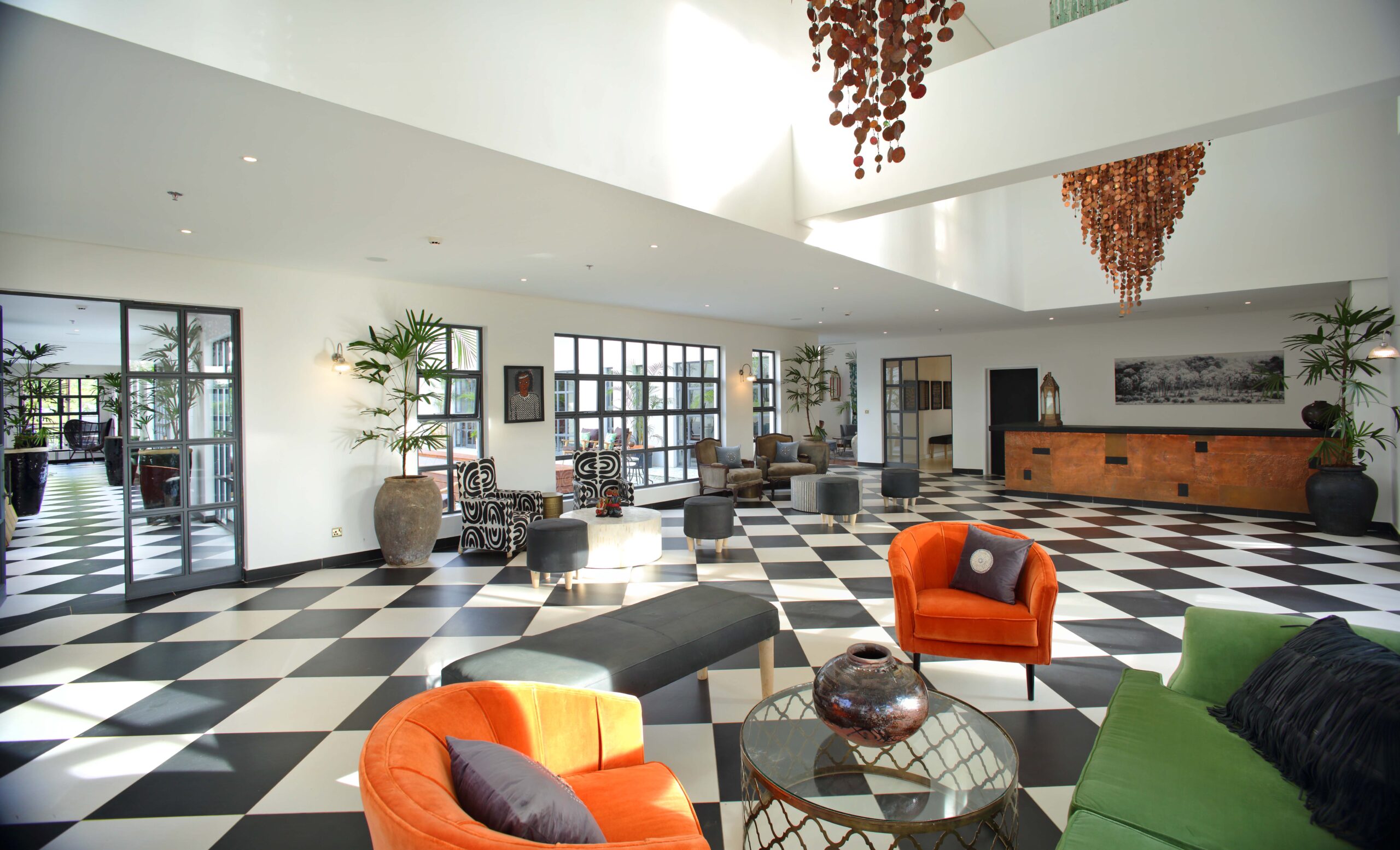
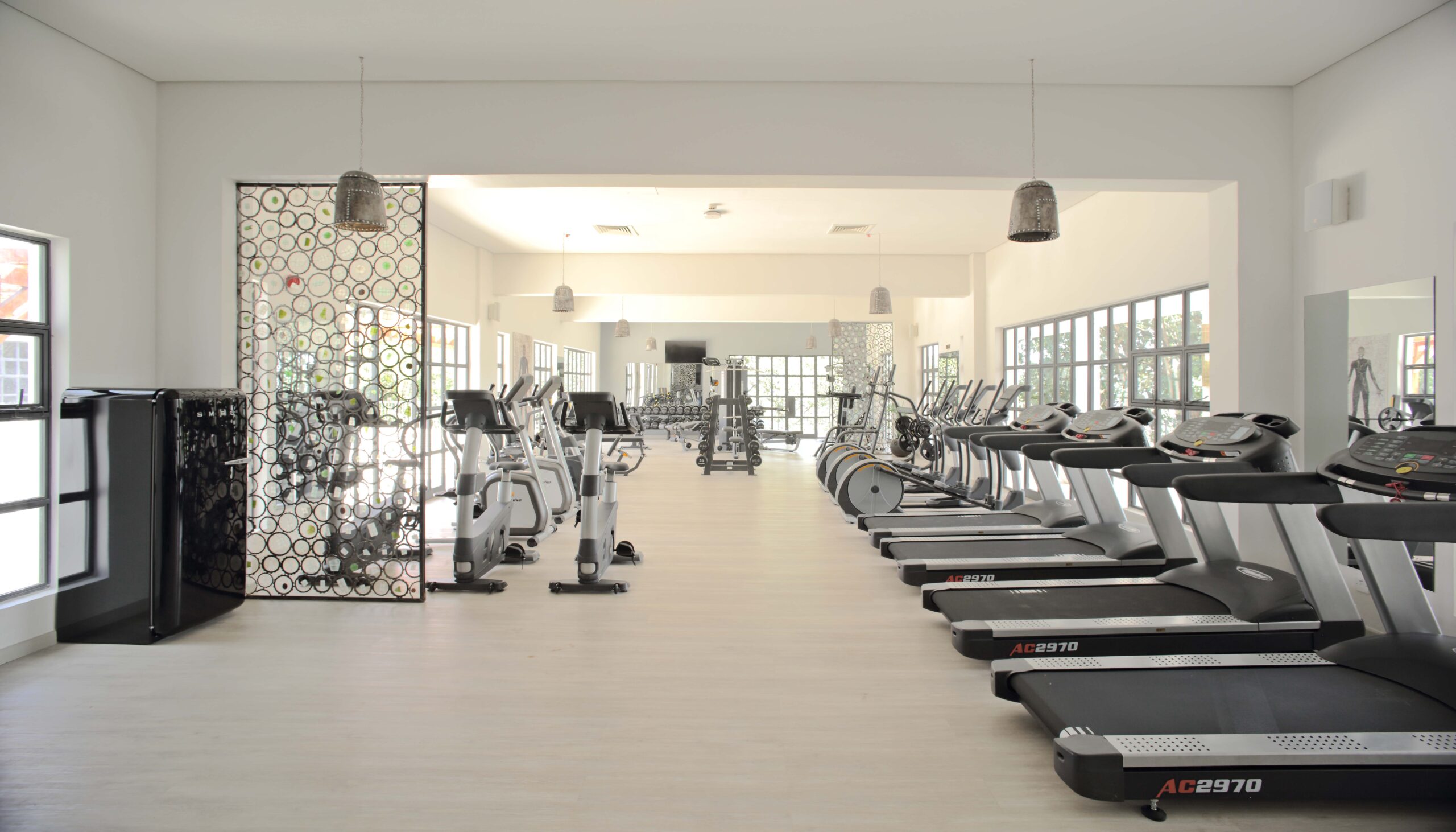
Hotel gyms are usually an afterthought. This one is not. It is a long, white, light-filled room with tall factory-style windows on two sides and a decorative screen of interlocking circles dividing the cardio equipment from the weights. I went every evening and came out restored.
The gym sits alongside the main pool, a long lap pool set on a teak deck with the grounds opening directly beyond it. Each evening I could see guests settled on the navy loungers in the last of the light.
The hotel also houses The Works, a co-working space and a set of meeting rooms I only glimpsed in passing. The reception desk alone, faced entirely in salvaged gears and cogs, is enough to make you want to sit down and produce something. The Brickworks meeting room, with its long wooden table, leather chairs, and tall windows onto the greenery, is the kind of room that makes a long agenda feel manageable. My own meetings were held across town that week. I did not stop regretting it.
Breakfast was a different kind of pleasure. The buffet covers both worlds: Ugandan dishes alongside continental offerings, with à la carte options for those who want something made to order. The ingredients are locally sourced where possible, and you can taste the difference. The fruit, arranged in abundance, included the best bananas I have eaten in my life. I ordered the French toast on my second morning. It arrived dusted with icing sugar, with a small black pot of dark syrup alongside. By my third morning, the staff were already asking if I wanted the usual.
In the evenings I ate at The Upside, the rooftop restaurant that at night becomes the most beautiful room on the property. Rattan pendant lamps glow warm against the dusk. The windows face Lake Victoria, a faint shimmer in the far distance. The kitchen produces serious Asian food. For a vegetarian, the menu is a pleasure: clean, fragrant, and precise. I ate well every evening.
Between the gym and dinner, I walked the grounds. The trees are tall and dense, the kind that muffle sound and slow everything down. On one of those walks, near a railing at the property’s edge, I found a tortoise moving with great purpose through the grass. I stood and watched it for a while. A cat appeared from somewhere and watched it too.
The cats were never part of any plan, the founders have said. They simply showed up and stayed. On the oasis on Makindye Hill, that feels exactly right.
Latitude 0° is located on Makindye Hill, Kampala, Uganda. Rooms start from approximately $180 per night, including breakfast. latitudezero.com