By Abna Ashanti
At Watches and Wonders Geneva 2026, where much of the industry continues to measure itself through technical escalation, Chanel took a different position.
There was no singular headline piece designed to dominate conversation through mechanical performance. No attempt to compete in the language of record-breaking complications. Instead, Chanel presented a broad and coherent body of work, reinforcing its long-standing approach to watchmaking through design, symbolism, and continuity.
Yet, somewhat unexpectedly, the object that drew the most attention was not a watch.
It was a chess set.
Presented as part of the broader Coco Game universe, the high jewellery chessboard quickly became one of the most discussed creations of the Salon. Each piece was conceived as a sculptural object, drawing from the visual language and codes associated with Coco Chanel. The board itself functioned less as a game in the traditional sense and more as a narrative composition, where form, symbolism and craftsmanship converged.
In a setting defined by precision and performance, the chess set introduced a different kind of engagement. It shifted attention from measurement to interpretation. From function to meaning.
This gesture did not stand apart from Chanel’s watchmaking. It clarified it.
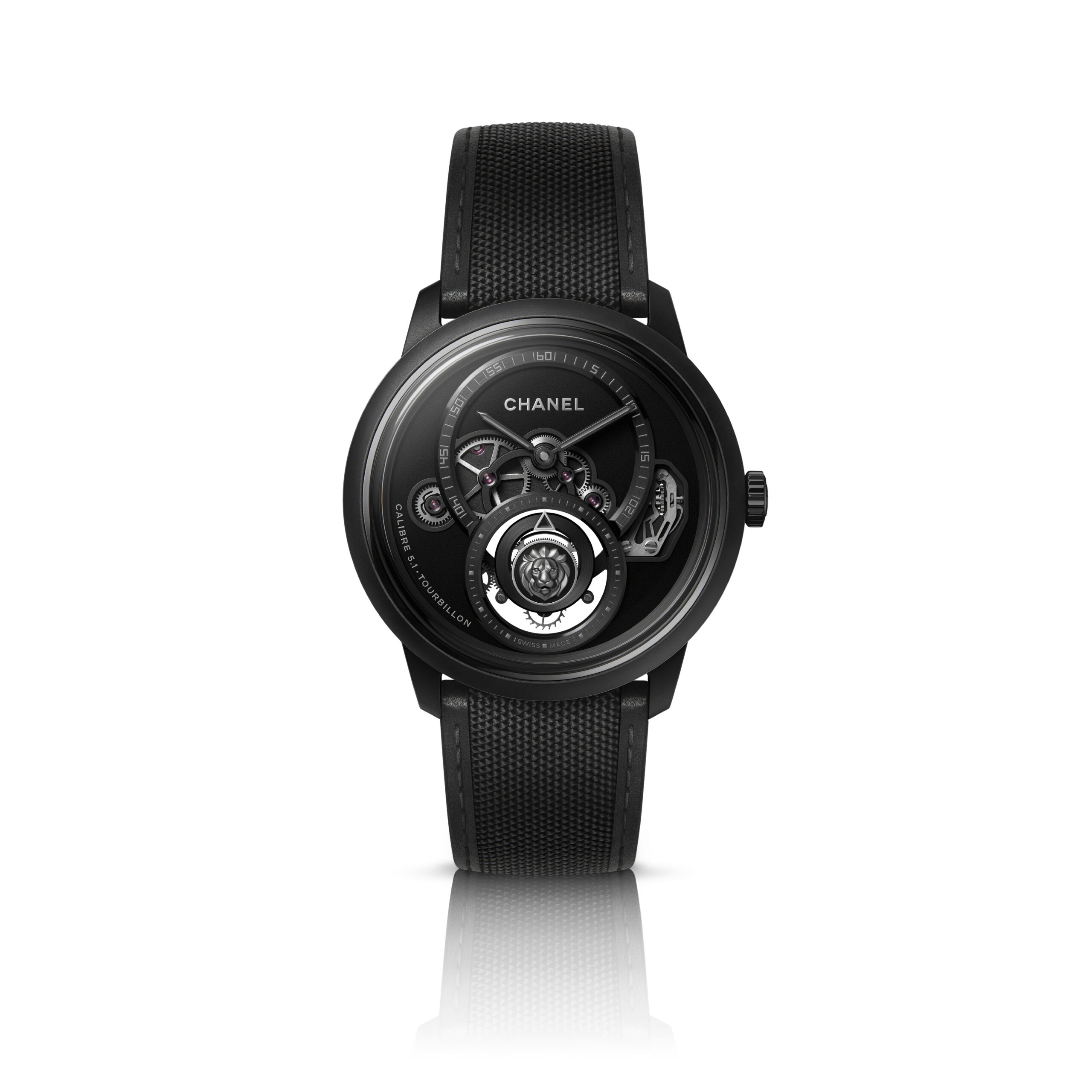
At the center of this year’s presentation was the Coco Game concept, a capsule collection placing Gabrielle Chanel at the heart of the design, reinterpreted across a series of high watchmaking pieces. She appears not as a distant historical figure, but as an integrated motif within the watches themselves, rendered in stylised or graphic form.
This narrative extended into the J12, Chanel’s most established watch line. Introduced in 1999 as a unisex ceramic sports watch, the Chanel J12 has become a defining piece in modern watch design. In 2026, the collection expanded further with new case sizes, including 28 mm and 42 mm formats, extending its presence across different proportions.
Alongside this, Chanel continued to develop its material language. The J12 in matte blue ceramic, first introduced as a limited series, entered the permanent collection, establishing blue as a third pillar alongside black and white. The development of this shade reflects the brand’s long-term investment in ceramic innovation.
The Coco Game theme also appeared within the J12 itself, where a stylised figure of Gabrielle Chanel is integrated into the dial, moving with the seconds. The technical execution required precise engineering to maintain balance and accuracy, reinforcing that even within a design-driven approach, mechanical integrity remains essential.
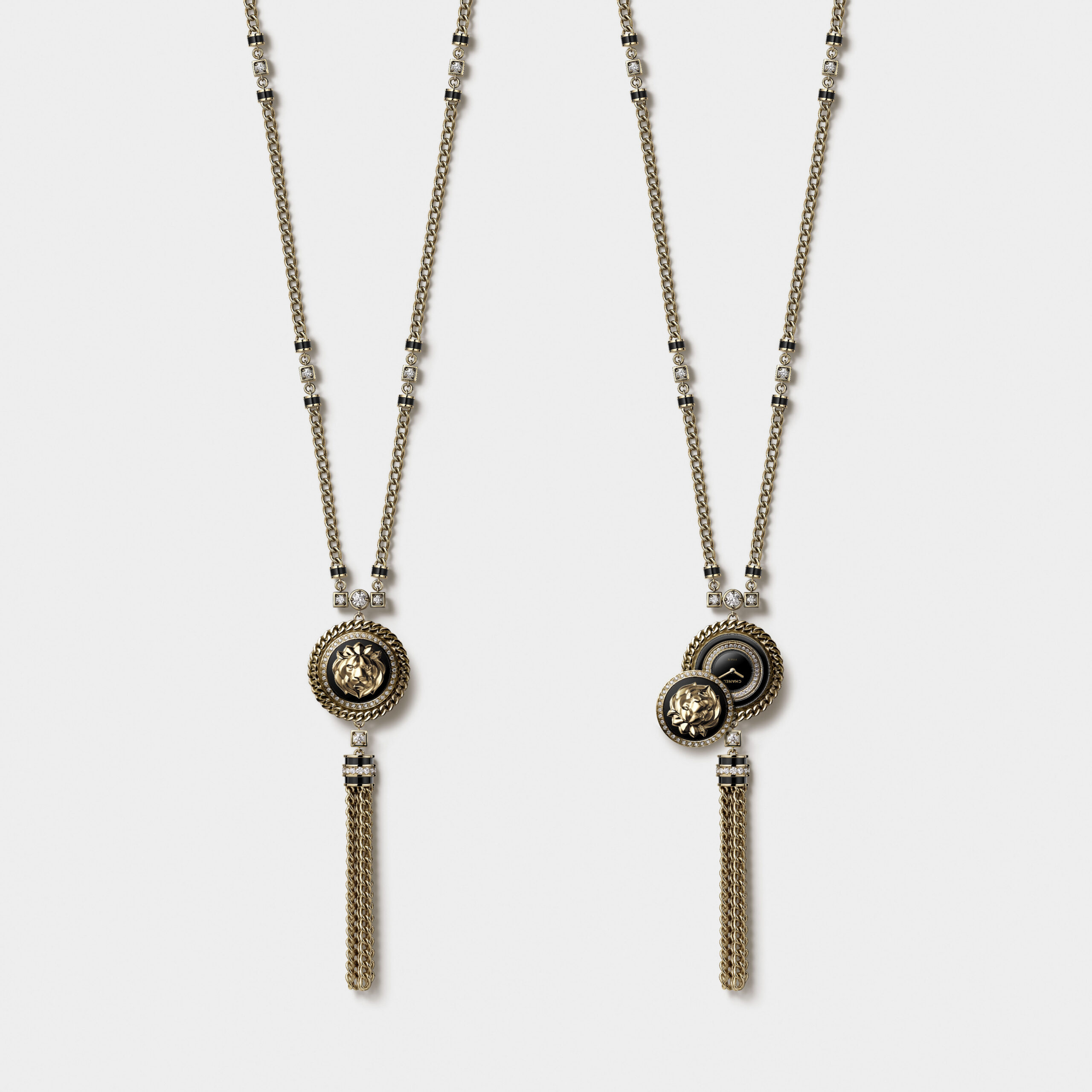
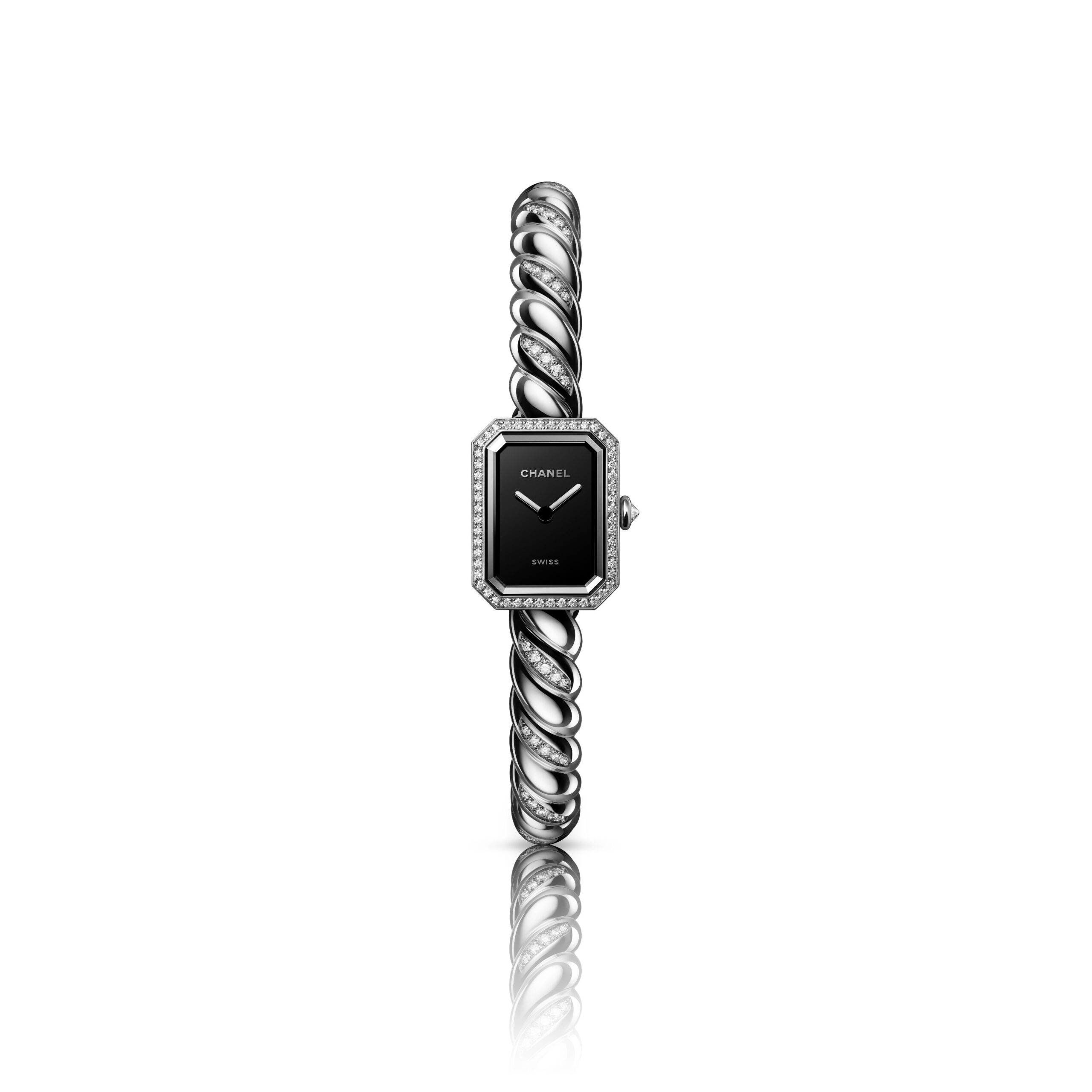
Beyond the J12, Chanel expanded its presence across high jewellery watchmaking. Pieces from the Camélia and Première lines moved further into the space between watch and ornament, where timekeeping becomes secondary to form, craftsmanship, and identity.
This is where Chanel defines its position.
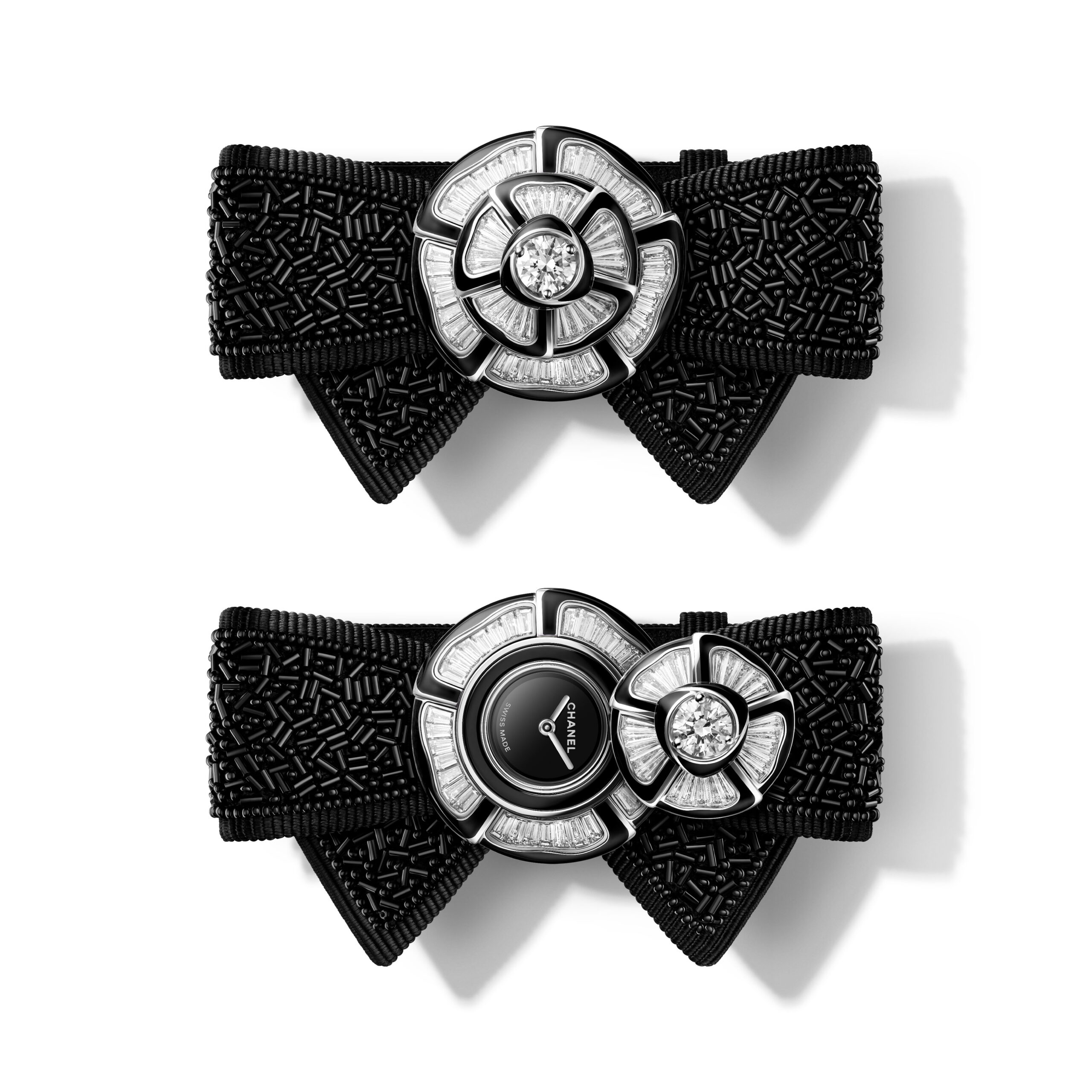
While many Swiss maisons build their authority through mechanical complexity, Chanel constructs its language through codes. Black and white. The camellia. The line. Repetition here is not redundancy, but refinement. Each iteration reinforces recognition.
In a setting like Palexpo, where novelty often drives attention, this consistency becomes deliberate. Chanel does not attempt to accelerate beyond the rhythm of the industry. It maintains its own.
Time, in this context, is not something to dominate or outpace. It is something to shape carefully, to revisit, and to reinterpret without breaking continuity.
What Chanel introduced this year, through both its watches and the chess set, was not a departure from watchmaking, but a reframing of it.
Time is not only measured.
It is constructed, interpreted, and refined.