WRITTEN BY NAZLI KOK AKBAS
K-pop idols are captivating global audiences, Bong Joon-ho’s Parasite grossed over 258 million dollars worldwide, and this September, Frieze Seoul welcomed more than 70,000 visitors in just four days. It raises the question: Is Seoul becoming the new cultural capital of the contemporary world?
The answer, increasingly, is yes. Seoul is emerging as a global hub for contemporary and pop culture, much like New York in the 1980s or Tokyo in the 1990s. South Korea blends art, technology, fashion, and music into a dynamic cultural ecosystem that speaks to global youth and creativity.
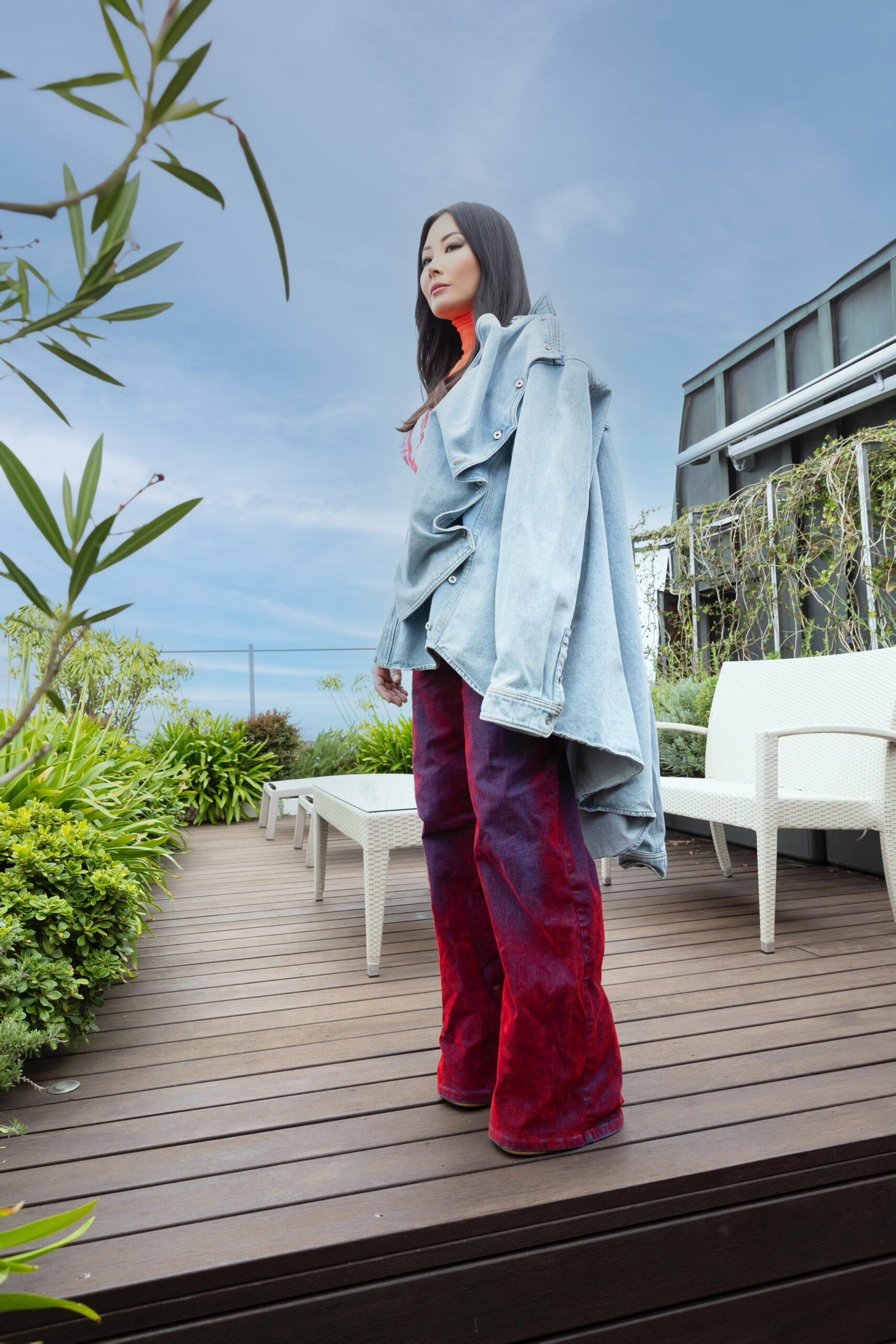
To understand this transformation, I spoke with Sunhee Choi, a leading figure in South Korea’s art scene and Co-Director of Choi & Choi Gallery. With more than two decades in the art business, Choi offers rare insight into how South Korea has become one of the most promising frontiers of contemporary culture.,
Nazli Kok Akbas (NKA): Sunhee, you are an art historian, gallerist, and journalist. You’ve been immersed in the art world for over 20 years. What inspired your decision to build a career in art?
Sunhee Choi (S.C.): I was born in South Korea, and after graduating from Sangmyung University with a degree in French Language and Literature, I moved to London to complete a postgraduate diploma at Christie’s Education. Before co-founding Choi & Choi Gallery with my twin sister, formerly known as Choi & Lager Gallery, I worked as a curator, art adviser, and writer. My goal in establishing the gallery was to build a meaningful bridge between the Asian and Western art worlds. I’m proud to say that this vision has been realized.
NKA: You’re also the author of the best-selling book Art Lessons in London and a columnist for The Art Newspaper.
S.C.: Yes, I’ve written for several publications, including JoongAng Daily, Noblesse, and Art Now. My book Art Lessons in London was published in 2008 and remains an important milestone in my career. I also regularly give lectures and participate in talks on art and culture. I believe it’s essential to keep generating new ideas and remain open to fresh perspectives.
NKA: What were your impressions of the recent Frieze Art Fair Seoul and KIAF Art Fair, which took place this September?
S.C.: My gallery participated in KIAF this year. KIAF was founded in 2002 by the Korea Galleries Association to provide a strong domestic platform for Korean galleries and artists while connecting them to the global art market. It was the first major art fair in Korea and helped establish Seoul’s reputation in the Asian art scene long before the arrival of Frieze. Supported by national institutions and the Ministry of Culture, KIAF became the main gateway for Korean artists to reach international audiences.
NKA: And what about Frieze Seoul?
S.C.: The original Frieze Art Fair began in London in 2003, followed by New York in 2012, Los Angeles in 2019, and Seoul in 2022. Frieze, now owned by the American Endeavor Group, has quickly positioned Seoul as a major stop on the global art calendar. This year’s edition attracted more than 70,000 visitors in just four days — a remarkable achievement.
NKA: It’s impressive that Seoul’s art scene is thriving during times of global uncertainty. Why do you think the center of the Asian art market is shifting toward South Korea?
S.C.: Hong Kong once held that position, but political instability and pandemic-related restrictions have weakened its status. In contrast, Seoul offers a stable, democratic, and technologically advanced environment — an ideal setting for art and culture to flourish.
NKA: Would you say that government support and favorable tax policies have also contributed to this growth?
S.C.: Absolutely. The South Korean government provides strong incentives for the art market, including tax exemptions on artworks, VAT and import duty relief, and deductions for cultural investments. These policies have encouraged both local growth and the arrival of major international galleries. It’s the perfect combination of domestic enthusiasm and business-friendly regulation.
NKA: Based on your experience, what defines today’s Korean art collectors, especially the younger “MZ generation”?
S.C.: Korean collectors are a fascinating blend of cultural pride, global awareness, and smart investment sense. The older Baby Boomer generation, born between 1946 and 1964, preferred established artists and were generally risk-averse. Generation X, born between 1965 and 1980, combines passion with strategy and actively participates in auctions and art fairs to build networks.
The MZ generation — Millennials and Gen Z — are very different. They are highly international, digital, and socially engaged. Influenced by social media and technology, they gravitate toward emerging artists, digital works, and cross-disciplinary projects. Their focus is more on experience and storytelling than on financial return.
NKA: The global art market is constantly evolving. How do you adapt your gallery to these changes?
S.C.: The market is currently in a period of adjustment. We’ve seen inflated prices in recent years, and now valuations are becoming more realistic. From the beginning, our gallery has prioritized fair pricing and integrity toward the entire art ecosystem.
In times of transition, everyone — artists, galleries, and collectors — must take responsibility and think critically about sustainability. My team and I continue to expand our exhibition programs in Seoul and Germany, participate in major art fairs, and strengthen both our local and international networks. Most importantly, we remain dedicated to supporting our artists’ creative growth and well-being.
NKA: Thank you, Sunhee, for sharing your insights and your time with Kai Zen Magazine.
S.C.: It was my pleasure. Thank you.
Photo credit: David Serkin and Choi & Choi Gallery
Website: www.choiandchoi.com
Instagram: @choiandchoi