Written by Nazli Kok Akbas
Julien Peltier’s artistic journey begins long before the studio, in a landscape shaped by family, memory, and a quiet attention to the natural world. Born and raised in France, he grew up in close connection with his grandparents, in an environment where manual skills, patience, and respect for nature were part of everyday life. These early bonds were not only emotional but formative; they taught him how to observe, how to wait, and how to understand the value of things that take time to reveal themselves.
His grandparents, in particular, played a central role in shaping his sensitivity. Through them, Peltier encountered traditional crafts, the rhythms of rural life, and an intimate relationship with materials such as leather, wool, earth, and plants. These were not abstract ideas but lived experiences — gestures repeated, textures touched, smells remembered. In this familiar context, creation was not separated from life; it was embedded within it. This closeness to ancestral knowledge instilled in him a deep respect for transmission, for what is passed down silently rather than explained.
Before fully embracing painting, Peltier followed a path marked by introspection and travel. Long walks, pilgrimages, and periods of retreat allowed him to cultivate a form of inner listening. Nature was never a backdrop for him; it was a presence and a teacher. This sensibility would later become central to his artistic practice.
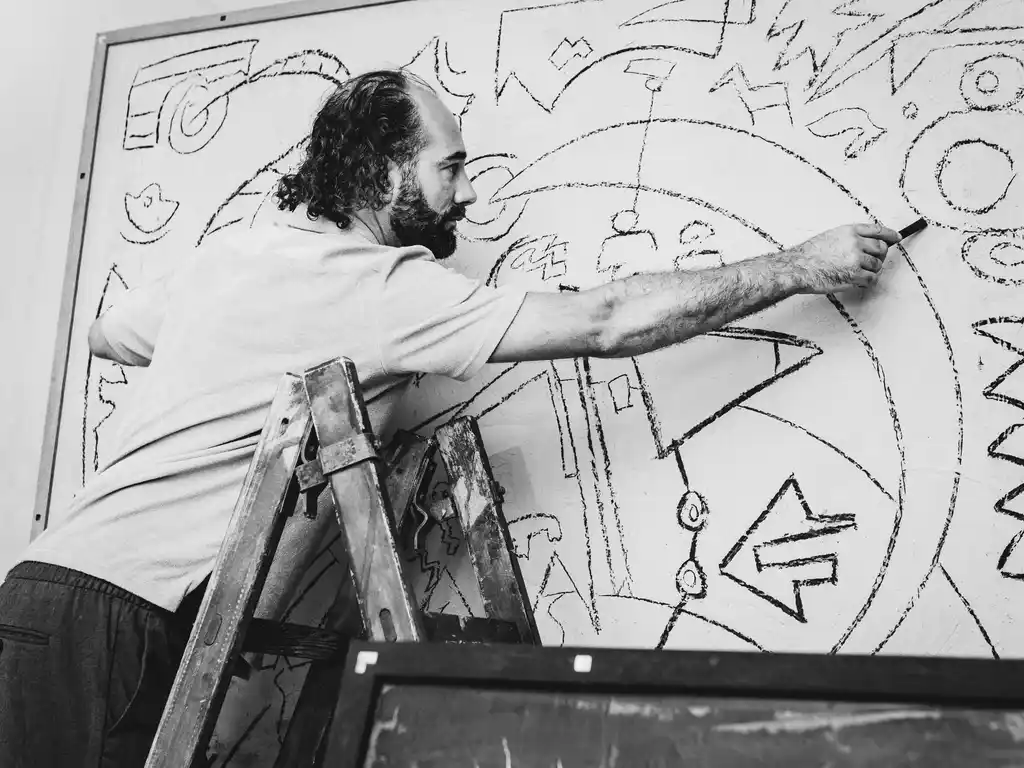
Julien Peltier’s work today is deeply rooted in material research drawn directly from nature. His approach is intuitive rather than scientific, guided by sensation, encounter, and trust. He collects earth, plants, ashes, and minerals from specific places, then patiently transforms them into pigments. Each color carries the memory of its origin — not only visually but energetically. For him, matter is not inert; it is alive, charged with history and vibration. Painting thus becomes an act of translation, a way of allowing nature to speak through color and light.
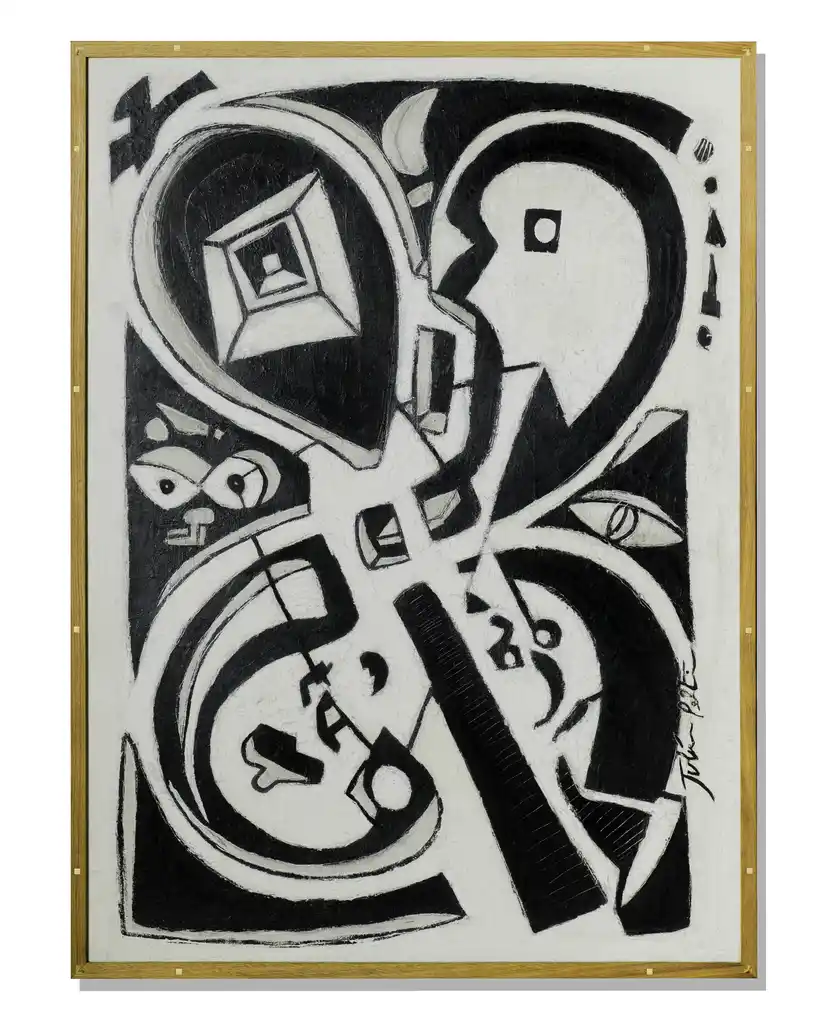
His canvases are not representations of landscapes but traces of lived encounters. Abstraction, in his work, is organic and grounded. It arises from delicate, repeated gestures, slow processes, and a careful balance between control and letting go. In his artistic practice, the act of painting resembles a ritual: a moment between the artist, the material, and the place from which it comes.
Peltier’s philosophy finds its most ambitious expression in his latest work, PROJECT 88, a long-term artistic journey that the artist shares with his friend Elliot Antoine, who documents their experience. Project 88 reflects both Peltier’s inner calling and his desire to reconnect art with the sacred dimension of place. The number 88, rich in symbolic resonance, marks the scale of the project: eighty-eight sites, each chosen for its ancient, spiritual, or energetic significance. These are places where humanity has long sensed something greater than itself — forests, mountains, sanctuaries, and forgotten thresholds.
Peltier’s motivation for Project 88 is simple yet profound: to slow down and listen. In a world dominated by speed and constant production, he chooses commitment and presence. Each site is approached as a collaborator rather than a subject. He spends time there. The resulting painting is not a souvenir, but an echo of what was felt.