WRITTEN BY MARIA MAY
There is a particular kind of knowledge that lives in the body long before it reaches the mind. Lauren McHale has been accumulating it since childhood.
Long before jewellery entered her life, movement did. Growing up in Newport Beach, California, McHale began classical ballet at the age of four, developing an early understanding of rhythm, balance, precision, and physical awareness. Later, snowboarding introduced another kind of movement entirely: freedom, instinct, and flow.
Looking back, she now sees how every chapter of her life quietly built the same creative language through different forms.
“The body understood balance and rhythm long before my mind understood design,” she says.
Today, that language exists within her jewellery.
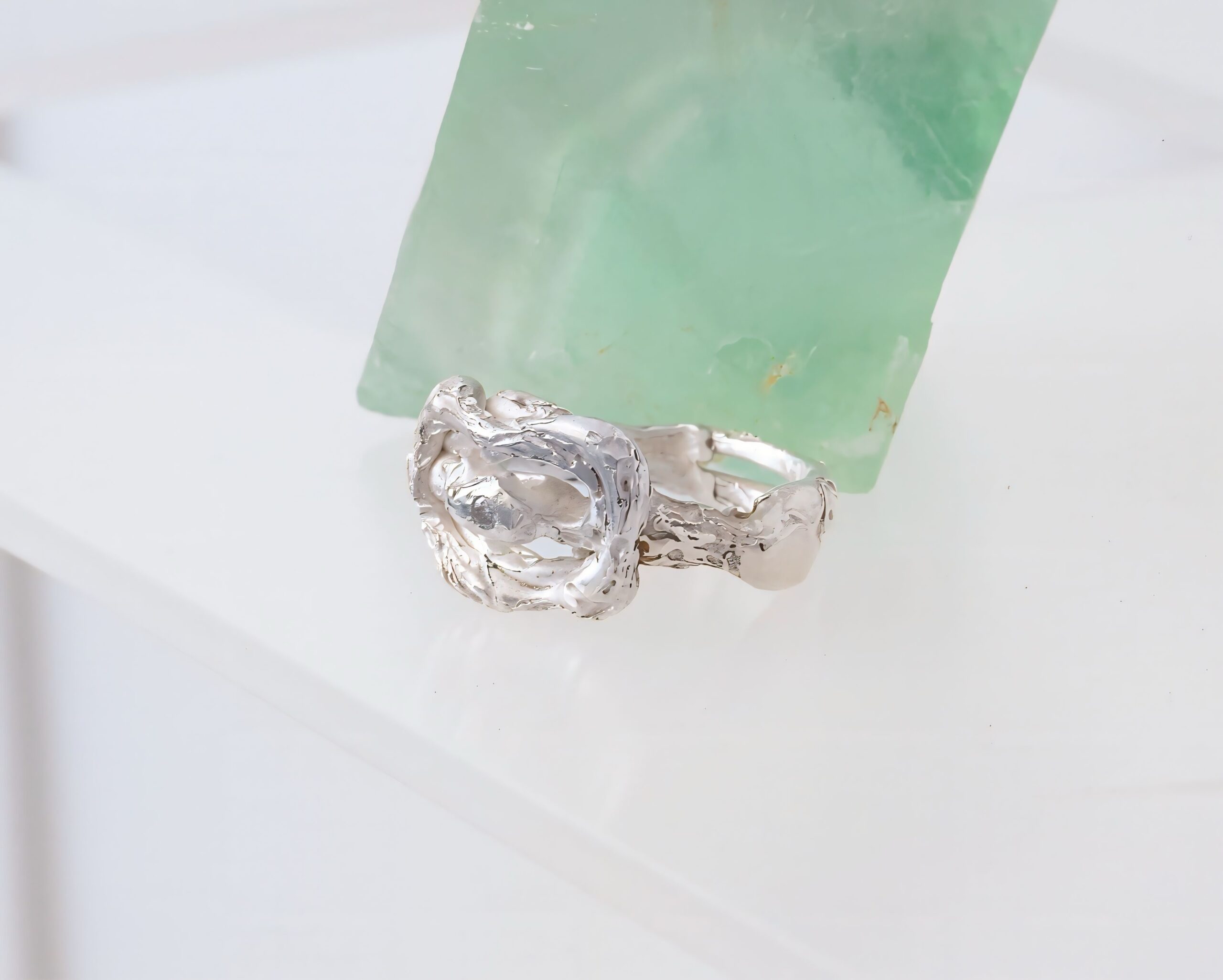
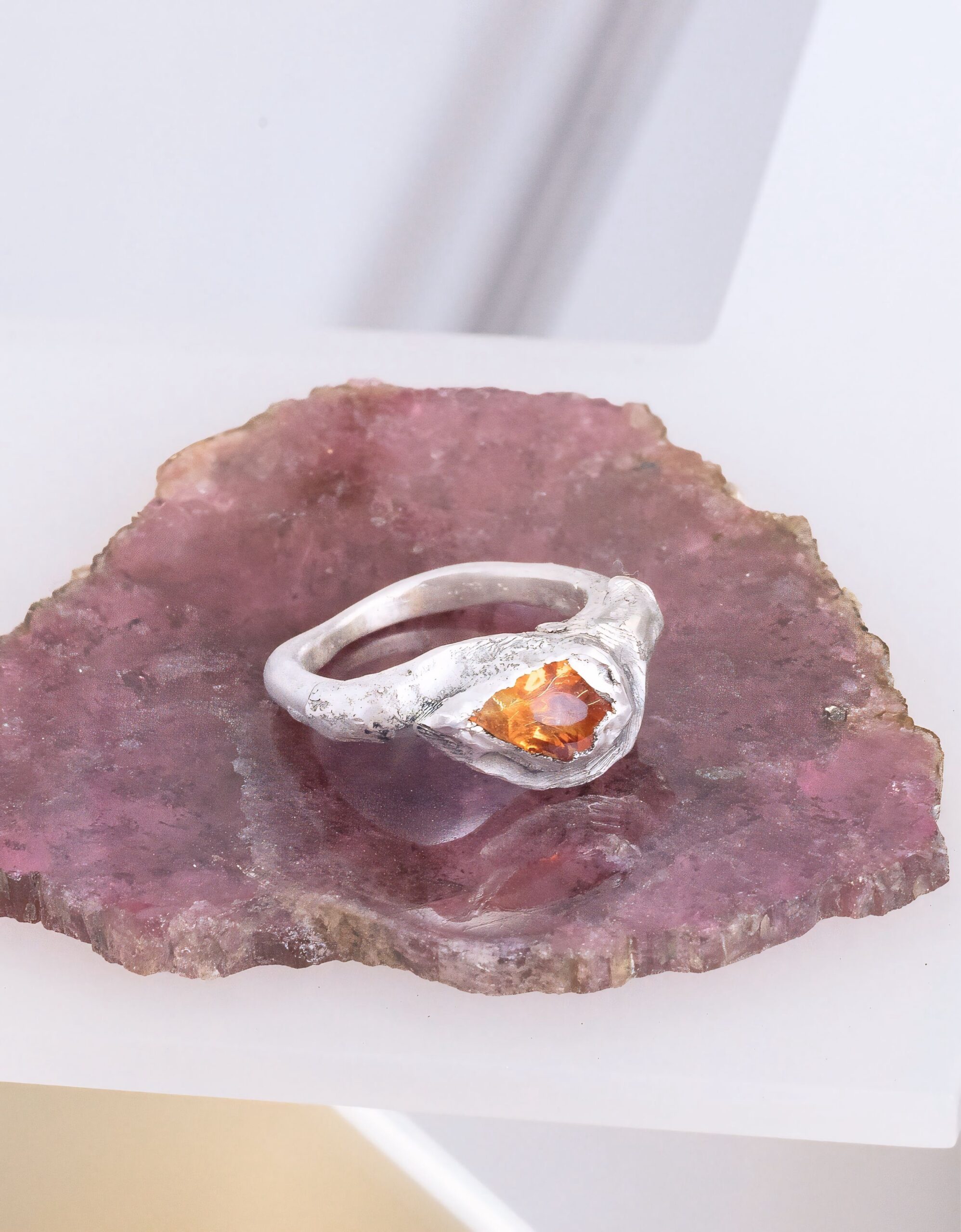
McHale’s pieces feel fluid yet permanent, as though they have been captured mid transformation. Metal appears softened, frozen in motion. Some evoke liquid suspended in time, while others resemble artifacts shaped by erosion or nature itself. They are wearable, but they resist functioning as simple accessories.
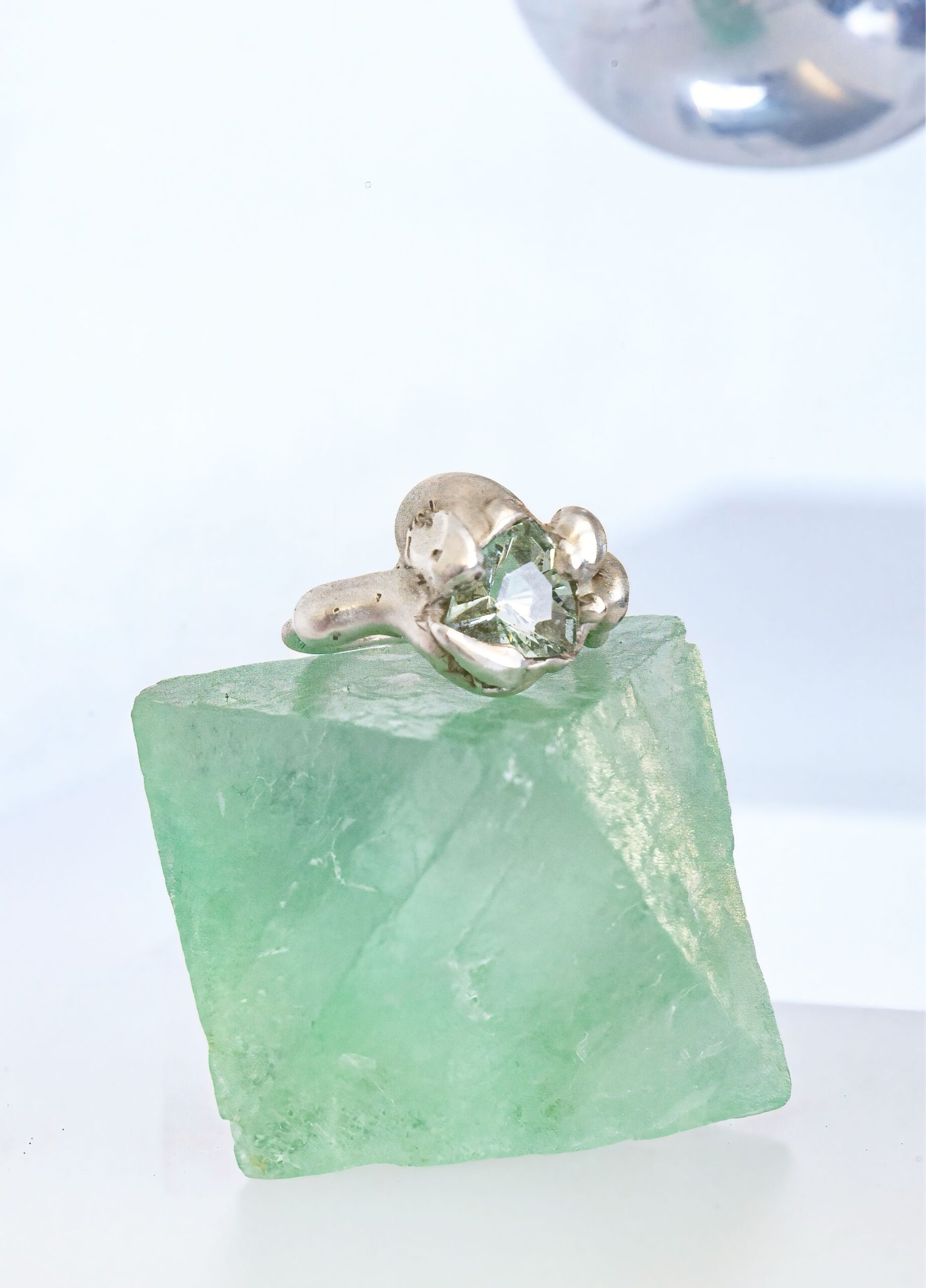
“I’ve never been interested in creating objects that simply decorate the body,” she explains. “I want to create artifacts that continue to provoke emotion and questioning over time.”
That perspective was shaped during her years inside the luxury fashion industry. McHale spent more than seven years at Emilio Pucci, eventually becoming Head of Special Techniques, where she worked on embroideries, embellishments, crystals, and surface development for runway collections and custom projects for artists including Beyoncé, Katy Perry, and Rita Ora.
Among those projects was the embroidered dress Beyoncé wore while singing the national anthem at President Obama’s second inauguration.
The work was creatively exhilarating but relentless. Fashion weeks often meant sleeping barely an hour a night while collections were completed under impossible deadlines. Over time, the pace became physically and mentally unsustainable.
“Luxury fashion trained every muscle of my creative mind the same way ballet trained every muscle of my body,” she says.
During the pandemic, McHale began questioning what her own aesthetic language looked like outside the brands she had spent years helping build. Jewellery became the answer.
Rather than beginning with sketches, she works instinctively, sculpting directly with her hands and allowing each piece to evolve naturally through movement, texture, and form.
“I don’t begin with drawings,” she says. “I begin with instinct, movement, and form.”
That instinctive relationship with materials traces back to childhood. Struggling with insomnia and ADHD, McHale spent nights building strange sculptures throughout her family home using paper, tape, and architectural materials borrowed from her father’s office.
“The child building strange sculptures throughout the house at night still exists in the jewellery studio today.”
Her work still carries that same tactile curiosity. She experiences colour, texture, and material emotionally before aesthetically, which perhaps explains why the pieces feel so alive. Curves appear fluid yet controlled. Surfaces remain intentionally imperfect, preserving traces of gesture and movement.
“My pieces capture moments in time because time itself becomes part of the creation process,” she explains.
For McHale, permanence matters more than visibility. In a world obsessed with speed and constant images, she is interested in creating objects that outlive trends and continue to be rediscovered over time.
Her jewellery exists somewhere between wearable sculpture, emotion-
al relic, and future artifact, pieces designed not only to be worn, but to remain.
Images courtesy of lamh marketing and David Serkin
Website: www.lamh.ch
Instagram: @l_a_mh_