LIFE AFTER HUMAN
By Nazli Kok Akbas
Few contemporary artists have redefined the exhibition experience as profoundly as French artist Pierre Huyghe. Since the 1990s, he has gradually abandoned the idea of the artwork as a fixed object, replacing it with living environments where animals, artificial intelligence, microorganisms, algorithms, weather, and human visitors coexist. His exhibition at Fondation Beyeler in Basel is not simply a collection of artworks—it is a constantly evolving ecosystem where biological, technological, and fictional realities intersect.
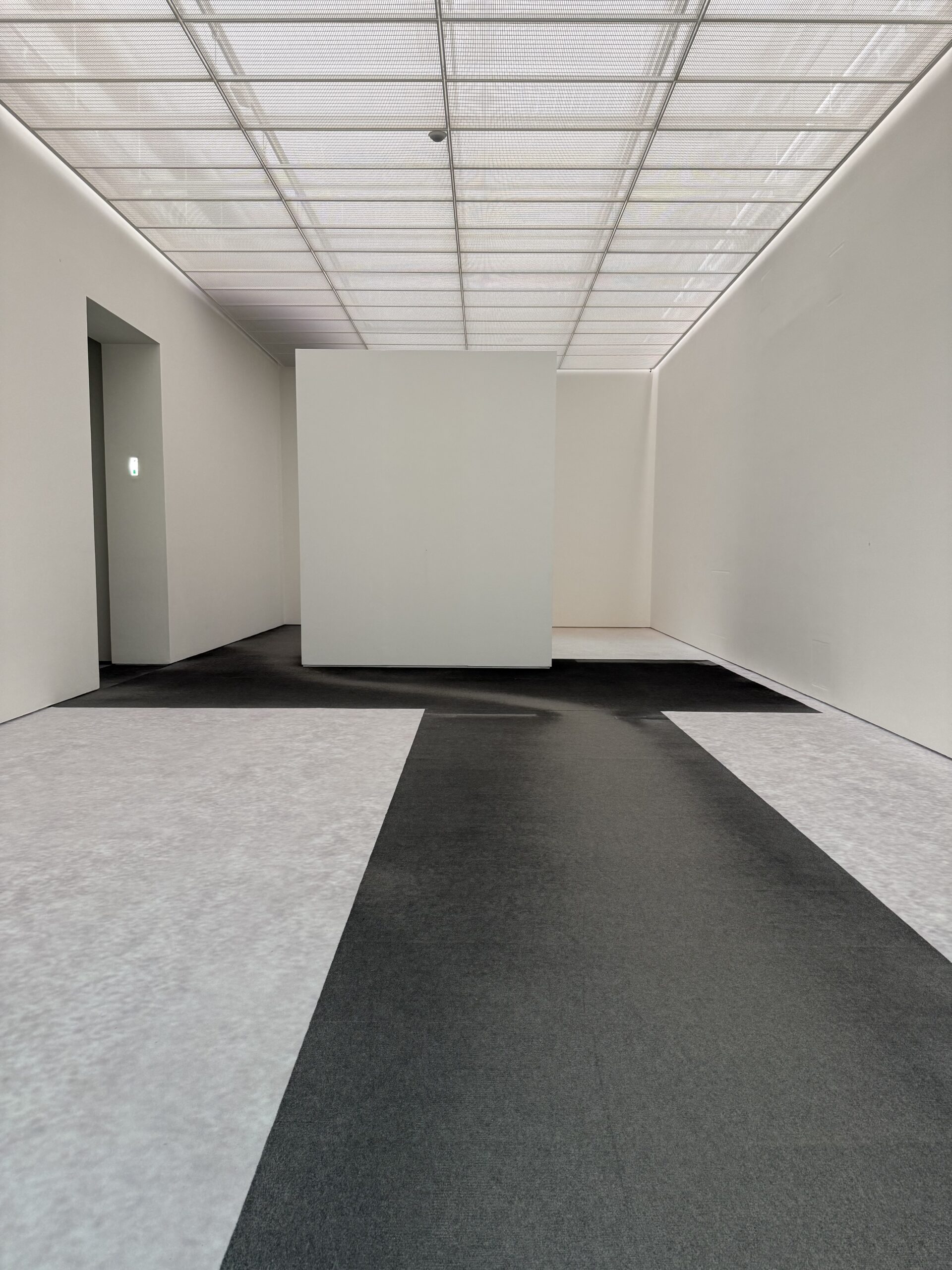
Conceived specifically for Fondation Beyeler, the exhibition brings together newly commissioned works alongside major recent installations. From the moment visitors enter, they step into a world that behaves according to its own rules. A monumental printed floor installation shifts with the changing daylight that enters the galleries, while colonies of living ants quietly occupy the space. The floor itself appears alive, reminding us that nothing here is static. Every element participates in a continuous process of transformation.
One of the exhibition’s most compelling works is Umwelt (2011). At first glance, it appears deceptively simple: a wall pierced by an opening, surrounded by colonies of ants, with a window that alternates between transparency and opacity according to a programmed rhythm. Yet the work raises profound questions about perception, coexistence, and control. The ants are not decorative additions or metaphors—they are active collaborators whose unpredictable movements continuously reshape the installation. Their presence reminds us that intelligence exists in many forms beyond our own.
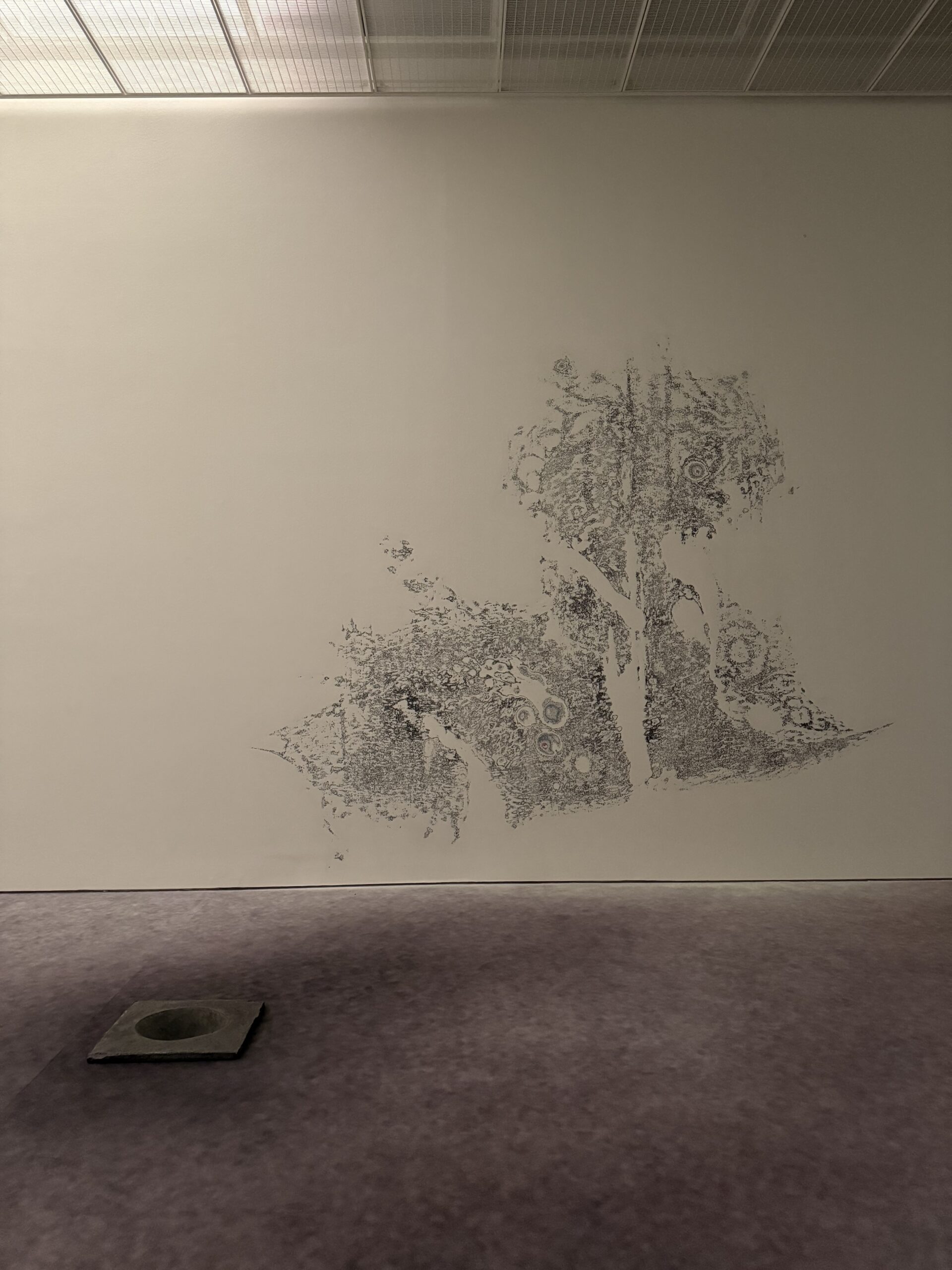
Throughout Huyghe’s work, ants have become symbolic of decentralized life. Operating collectively without a central authority, they challenge humanity’s instinct to place itself at the centre of existence. In Huyghe’s universe, humans are no longer the dominant authors of meaning but simply one participant among countless living systems.
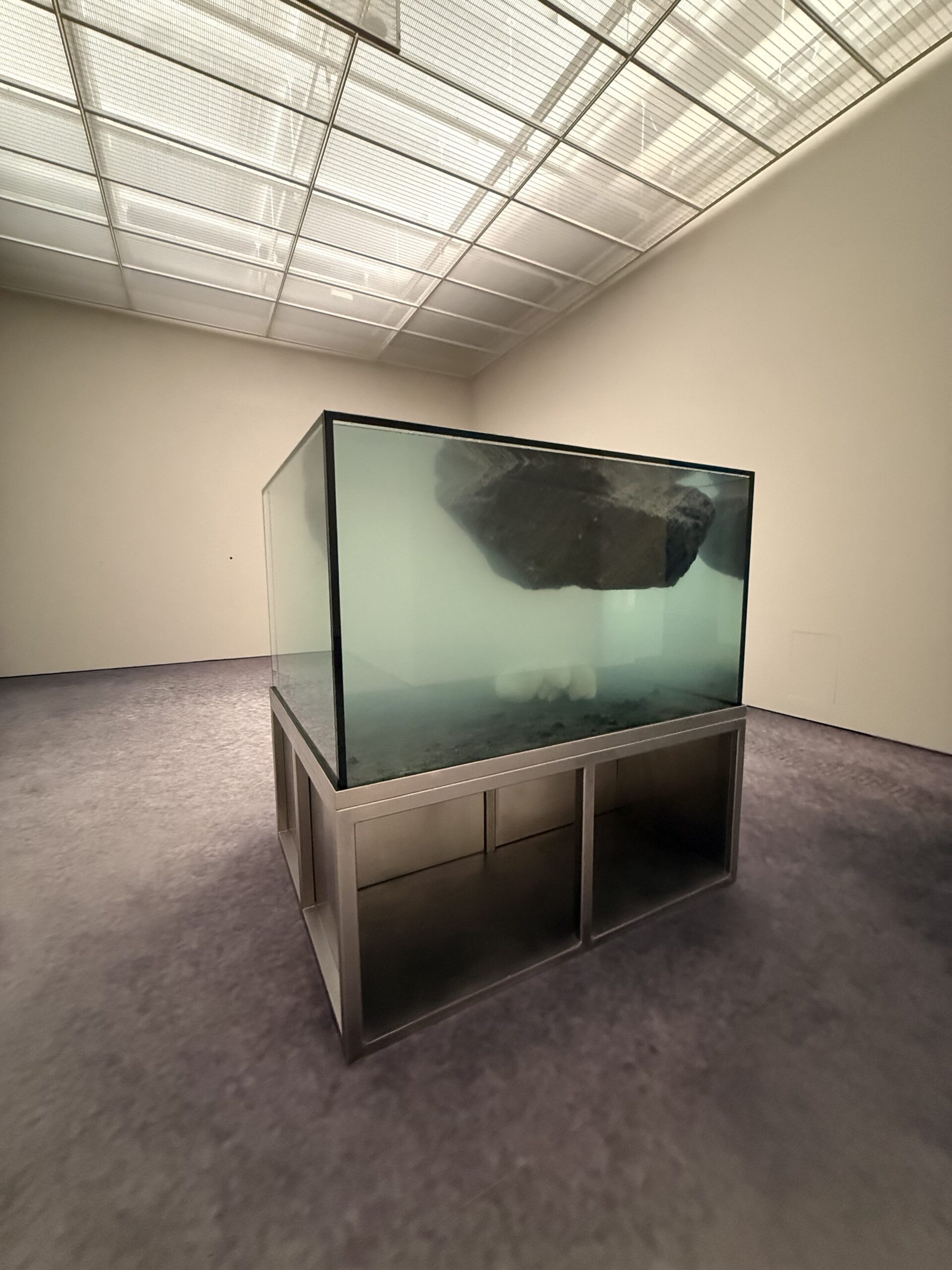
Equally captivating is Cambrian Explosion 19 (2013), in which a massive stone mysteriously floats upon water. The work evokes geological time rather than human history, creating a strange sensation of existing somewhere between the distant past and an unknown future. It quietly reminds us that the Earth has always evolved independently of human presence.
Perhaps the exhibition’s most fascinating work is Liminal (2024–ongoing), an artwork unlike any traditional film. Powered by sensors, artificial intelligence, sound, and real-time environmental data, the installation continuously generates new imagery. Temperature, humidity, and changing conditions influence what unfolds on the screen, ensuring that no two visitors experience exactly the same work.
Rather than telling a story with a beginning and an end, Liminal behaves like a living organism. It constantly learns, adapts, and transforms, inviting viewers to question who—or what—is truly creating the image. Is it the artist? The machine? The surrounding environment? Or all three together?
This uncertainty lies at the heart of Huyghe’s practice. Rather than offering clear answers about artificial intelligence or climate change, he creates situations where visitors experience uncertainty itself. Nature and technology, organic life and digital systems, reality and fiction dissolve into fluid hybrid forms that can no longer be separated.
The exhibition feels remarkably timely. As society grapples with artificial intelligence, environmental change, and rapidly evolving technologies, Huyghe proposes neither optimism nor dystopia. Instead, he imagines a post-human world where humans are no longer the sole measure of existence. Animals, machines, minerals, and algorithms become equal participants in shaping reality.
More than an exhibition, Life After Human becomes an invitation to rethink our place within a much larger ecosystem of intelligences. It is one of the most intellectually ambitious and visually captivating exhibitions currently on view in Europe—an unforgettable reminder that the future may belong not to humanity alone, but to the relationships we build with every form of life that surrounds us.