
By Abna Ashanti
It takes a certain kind of curiosity to sign up for a cooking class in a city you already think you know.
Seoul is not new to me. I have returned at least five times, each visit adding another layer to an already vivid memory. I know its rhythm, its contrasts, the quiet precision of its cafés and the intensity of its street food. Or at least, I thought I did.
Still, I found myself standing outside a small cooking studio, far earlier than necessary. Old habits. Swiss precision does not fade easily. I had walked past the location earlier that day, just to be sure. I didn’t want to miss even a few minutes.
My relationship with Korean food is more recent. Like many, I came to it later. But once it found me, it stayed. There is something quietly compelling about it. The balance. The variety. The way a meal can feel both grounding and energizing at the same time.
As a vegetarian, I tend to be careful in cuisines where fish-based ingredients can appear unexpectedly. It is not always obvious. To avoid any confusion, I chose a vegan menu for the class, mainly to ensure there was no hidden fish sauce or anchovy broth woven into the dishes.
What became clear quickly is that the experience is flexible by design. Whether you follow dietary restrictions or not, the class adapts without friction. It is not a fixed version of Korean cooking, but an accessible entry point into it, shaped around individual choices as much as shared techniques.
I was the second to arrive. An Australian participant was already there, and we waited together outside the glass door as the studio prepared to open. There was an easy sense of anticipation, the kind that forms quickly in small groups brought together by curiosity and food.
The class itself felt designed for an international audience. That shaped everything in a subtle way. No assumptions, no hierarchy of experience. Just openness.
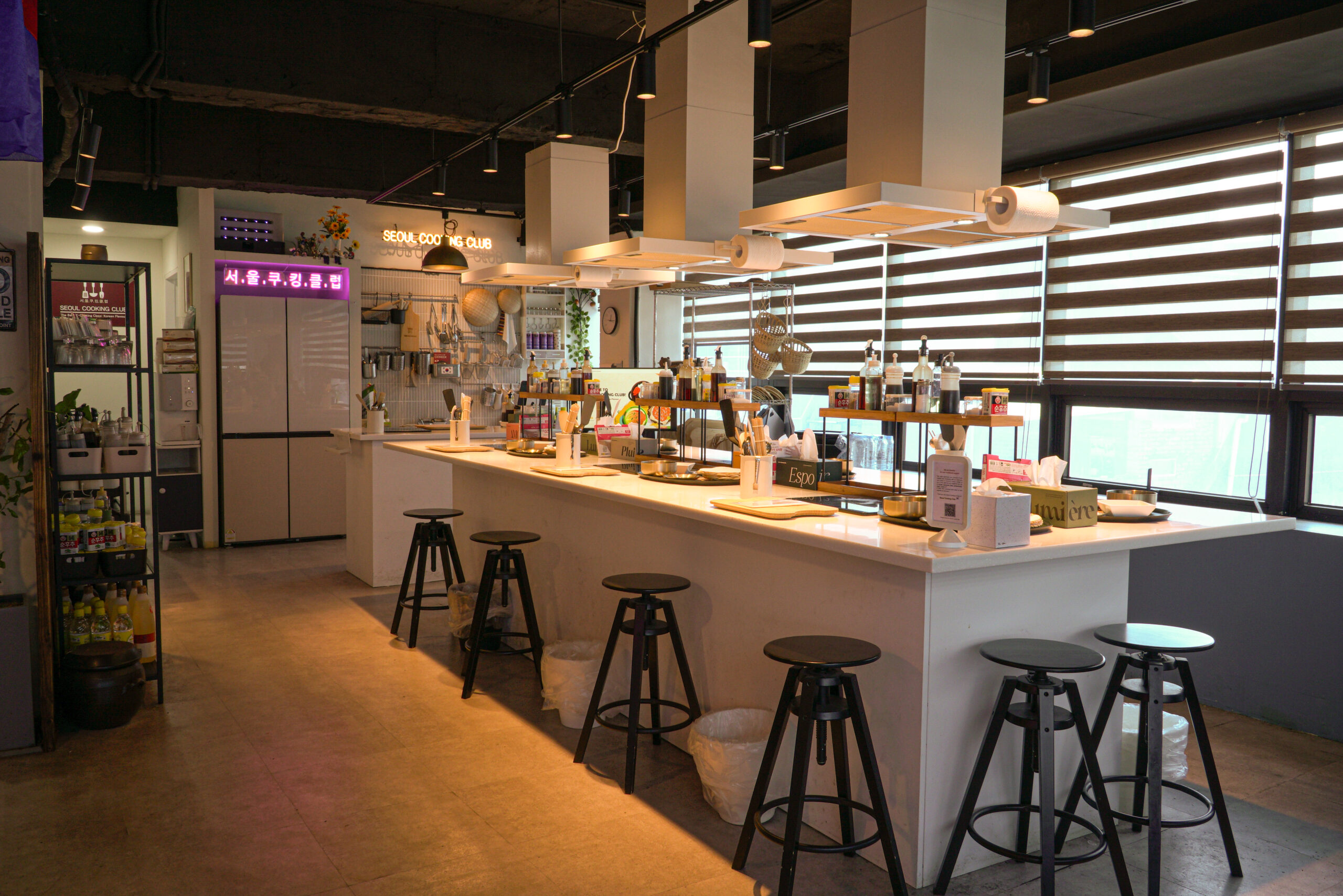
When the doors finally opened, the atmosphere shifted immediately. The studio was intimate in scale, thoughtfully arranged, with everything designed to draw attention to detail rather than volume. It felt personal without being staged. Present without being loud.
The ingredients were already prepared and laid out, which helped us focus. It was less about rushing through steps and more about understanding what we were working with. How vegetables look in their raw state. How they change with heat. How simple things come together.
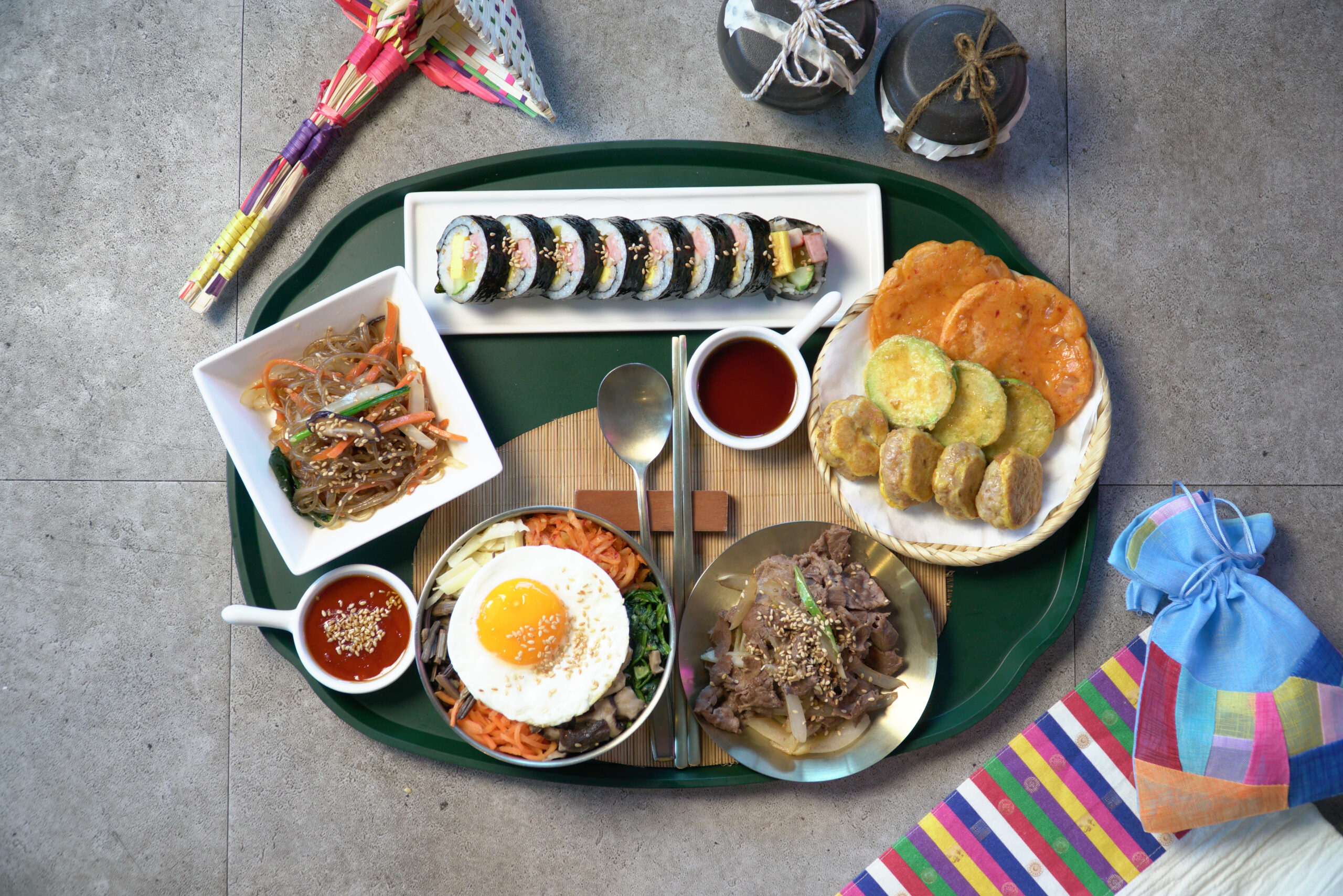
We started with Hobak Jeon. Zucchini, sliced thin, coated lightly, and pan fried until soft and golden. Simple, but precise.
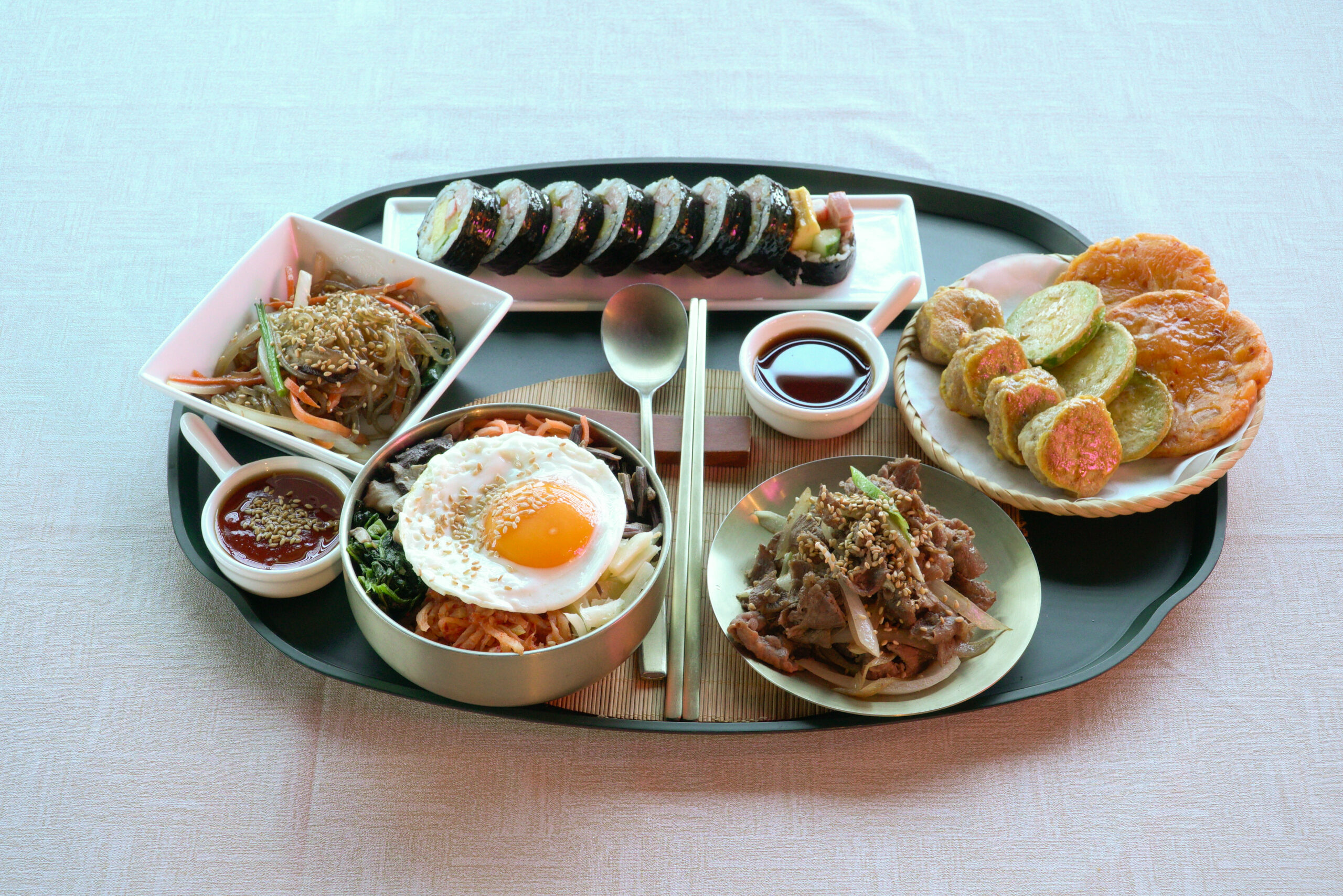
Then came Gimbap. Rice and vegetables rolled into sheets of seaweed, each piece clean and composed. Familiar, comforting, and quietly satisfying.
Japchae followed. Glass noodles made from potato starch, glossy and elastic, tossed with vegetables. A dish that plays with texture as much as flavor.
Next was Tteokbokki. Chewy rice cakes coated in a sauce that balances heat and sweetness in a way that lingers. Bold, almost playful.
And finally Bibimbap. Rice, vegetables, and an egg bringing everything together. I had chosen a vegan menu to avoid fish-based ingredients, while others approached the dishes with fewer restrictions, tasting freely across what had been prepared.
By the time we sat down to eat, the table was full. More than enough. Generous in a way that felt intentional. The simplicity of it all made space for conversation, for ease, for attention to the food itself.
As we ate what we had made, something shifted. These were no longer dishes I had only ordered in Seoul’s restaurants. They had become processes I could now repeat, understand, and slowly bring into my own kitchen.
It was then, in that quiet moment between bites, that the staff brought out a printed copy of their cookbook. Not yet released. Something between a preview and a gesture of trust.
A Day in Seoul is not just a collection of recipes. It reads like an extension of the experience we had just lived. Each dish carries context. Each page feels grounded in the same approach we had just encountered. Clear, accessible, but never simplified to the point of losing its character.
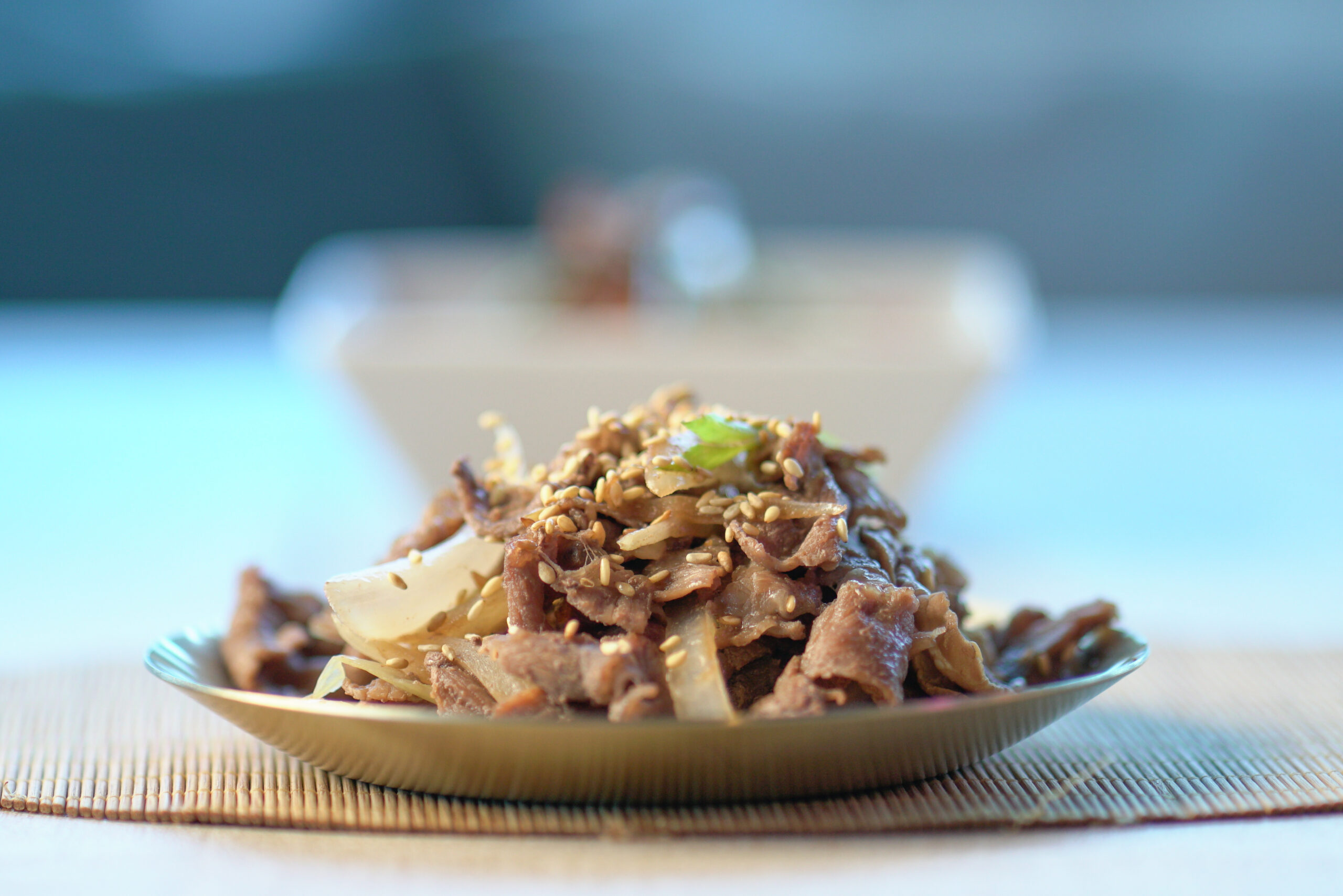
Seeing it there, before its official launch, felt like being let in on something early. Not exclusive in a loud way, but quietly meaningful. It connected the class to something more lasting.
A way to take the experience home in a more tangible form than memory alone.
As expected, nothing went to waste. Containers were provided without hesitation, and the meal continued beyond the table in the simplest way.
Walking back out into the city, takeaway in hand, I realized this had offered something I hadn’t found in my previous visits.
Not discovery, exactly. Something closer to perspective.
Seoul had not changed. But the way I moved through it had. Through the act of cooking, of paying attention, of slowing down, the familiar became layered again.
And now, some of it will follow me home. Into a kitchen in Switzerland, where these same dishes will reappear in a different light.
And sometimes, that is the only kind of newness that matters.
The first cookbook from Seoul Cooking Club has just been released:
A Day in Seoul: A Korean Cookbook — https://a.co/d/dQ0Qic3
Where Every Dish Tells a Story
Seoul Cooking Club 🇰🇷